Why am I working out but not losing weight?
If you're working out but not losing weight, the cause is usually what you're eating. Here's how to tell if it's too much or too little, and what to change.


In this article
You’re putting in work that used to get results. Your gym routine has started to feel like Groundhog Day. The scale lands on the same number week after week. Search for why and you get a million different opinions.
If you’re working out but not losing weight, the cause is usually what you’re eating. Most often, you’re eating more than you realize. A workout burns fewer calories than you’d think and makes you hungrier, often for the wrong foods.
The opposite happens too. Men who train hard and skip meals often eat too little to recover. Their metabolism slows, their workouts go flat, and fat loss stalls.
Below are five habits that keep you stuck and a one-week test that shows where to start.
Exercise alone rarely moves the scale
A hard strength session burns a few hundred calories. A glass of wine and a shared dessert at a client dinner can wipe out the calories you just burned.
Training also makes you hungrier. If your meals are light on protein and quality carbs, you recover poorly and crave sweets, chips, and the bread basket. You end up eating more, mostly from the foods that slow fat loss the most.
Your workouts still matter. Their job is to build and keep muscle, so the weight you lose comes from fat. How fast that fat comes off depends on what you eat and how much you move the rest of the day.
Five habits that keep you stuck
Each one can cost you months while you keep putting in the work.
Eating more than you think
You probably eat a few hundred more calories a day than you think. The missing calories hide in the extras. Cooking oil and butter, cream in your coffee, bites while you cook, a second glass of wine, and restaurant portions add up fast. Client dinners, travel days, and weekends are where they pile up.
You can keep the wine and the dessert if you plan for them. At a restaurant, order a grilled protein and a vegetable, then split the dessert. Keep drinks to a couple of nights a week, finished at least two hours before bed. Your body burns far less fat while it clears alcohol. Late drinks also disrupt your sleep.
Eating too little to fuel your training
The opposite problem shows up in men who train hard and eat light. Many work straight through lunch, so dinner is the only real meal of the day. Others have fasted on purpose for years with little to show for it.
Eat far less than your training needs and your body starts saving energy. Your thyroid slows down, your energy drops, your workouts feel flat, and recovery lags. Cortisol, your main stress hormone, climbs. If you wear a fitness tracker, you’ll often see your HRV drop.
Sometimes the fix is more food. A physical therapist in his forties started coaching with us in February. Over his first 90 days, we raised his daily calories by about 45%. He dropped from 190 to 169 pounds and took six inches off his waist. Once you eat enough, your body stops saving energy. You recover better and keep your muscle, so more of the weight you lose comes from fat.
Start with protein, about 1 gram per pound of goal body weight, spread across the day. Then add quality carbs, like rice, potatoes, oats, and fruit, around your workouts.
Too few steps outside the gym
Your workout takes about an hour of your day. A day of meetings, desk work, and a drive home can leave you under 4,000 steps. At 10,000 steps a day, your walking can burn more calories over a week than your workouts do.
Aim for 10,000 steps a day, with 7,500 as your floor. If you’re under 7,500 now, add 2,000 to 3,000 steps a day and build from there. Walk your phone calls, take a 10-minute walk after lunch and dinner, and walk the terminal on travel days. A walking pad under a standing desk adds thousands more. During my own spring cut, I averaged 13,890 steps a day.
Short sleep
Sleep decides how much of the weight you lose comes from fat. In a University of Chicago study, 10 overweight adults with an average age of 41 ate the same reduced diet for two weeks. They did it twice, once with 8.5 hours in bed and once with 5.5.
They lost about the same weight both times. With full nights, about 3 pounds of it was fat. With short nights, just over a pound was fat. The rest came from muscle and other lean tissue.
Short nights also make you hungrier the next day. Get up at the same time every day, weekends included, and set a bedtime that gives you a full night.
Judging by the scale alone
The scale can hide fat loss. Your weight can swing a few pounds from one day to the next with salt, carbs, alcohol, and travel. A man who lifts can also add muscle while he loses fat. The scale counts both.
One of our clients, a VP in construction, lost 15 pounds of fat and gained 12 pounds of lean mass in four months. His scale moved about 3 pounds. His body fat went from 19% to 13%.
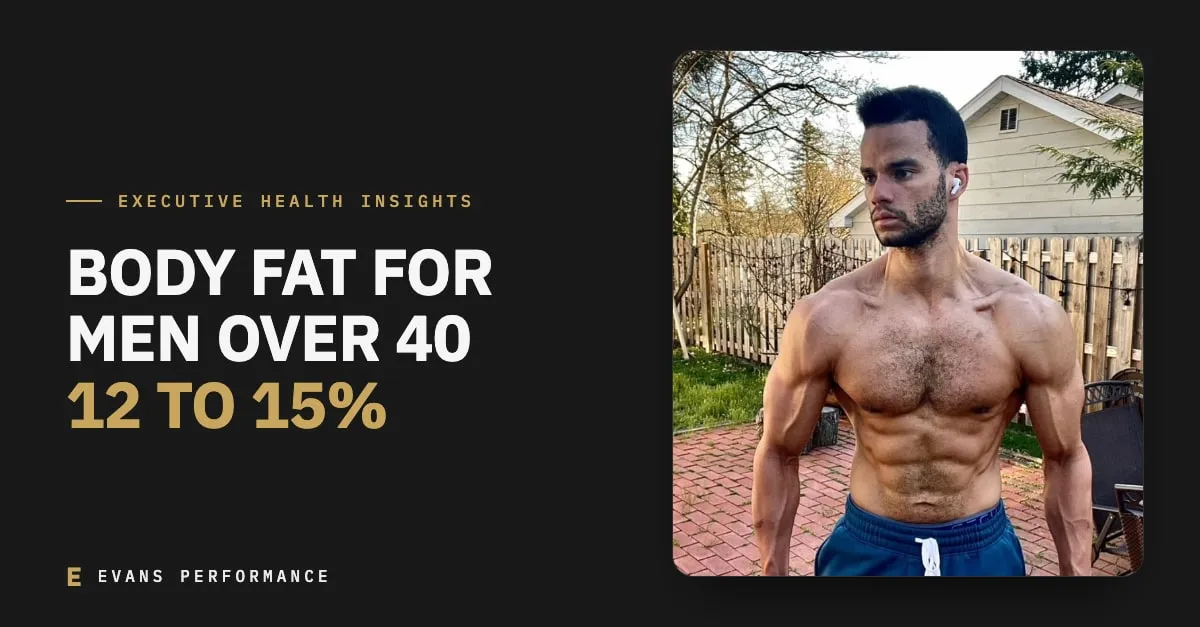
Weigh yourself every morning and compare each week’s average with the week before. Measure your waist at the navel once a week. A decent smart scale shows the body fat trend. A quarterly InBody or DEXA scan gives a sharper read. For men in their late 30s and 40s, we aim for 12 to 15% body fat.
One week of tracking shows where to start
Before you start, write down what you think you eat on a normal day. Then, for one week, log everything you actually eat and drink, weekends included. Check your step count each day.
If your log shows more than you wrote down, you’re eating more than you think. Start with the biggest extras, usually drinks, dinners out, and snacks.
If your log looks light for how hard you train, your workouts feel flat, and you’re starving at night, you’re eating too little. Start by adding protein at breakfast and lunch.
If most days come in under 7,500 steps, start with your steps.
Change one thing at a time. Give it two weeks, then compare your weigh-ins and your waist.
If you’re still stuck, check your blood work
Once your eating, steps, and sleep are on track, these three markers are next. Each one can come back normal and still slow your fat loss.
Fasting insulin is my number-one predictor of how fast a client will lose fat. High insulin keeps your body in fat-storing mode. Many labs call anything up to 18.4 µIU/mL normal. We want 2 to 5. If yours is high, your daily steps matter even more, because working muscle pulls sugar out of your blood. Fix Your Metabolism goes marker by marker through the insulin side.
Free T3 is your active thyroid hormone. It drops when you eat too little to fuel your training. We want 3.0 to 3.5 pg/mL. If yours is low and you train hard, more food is usually the fix.
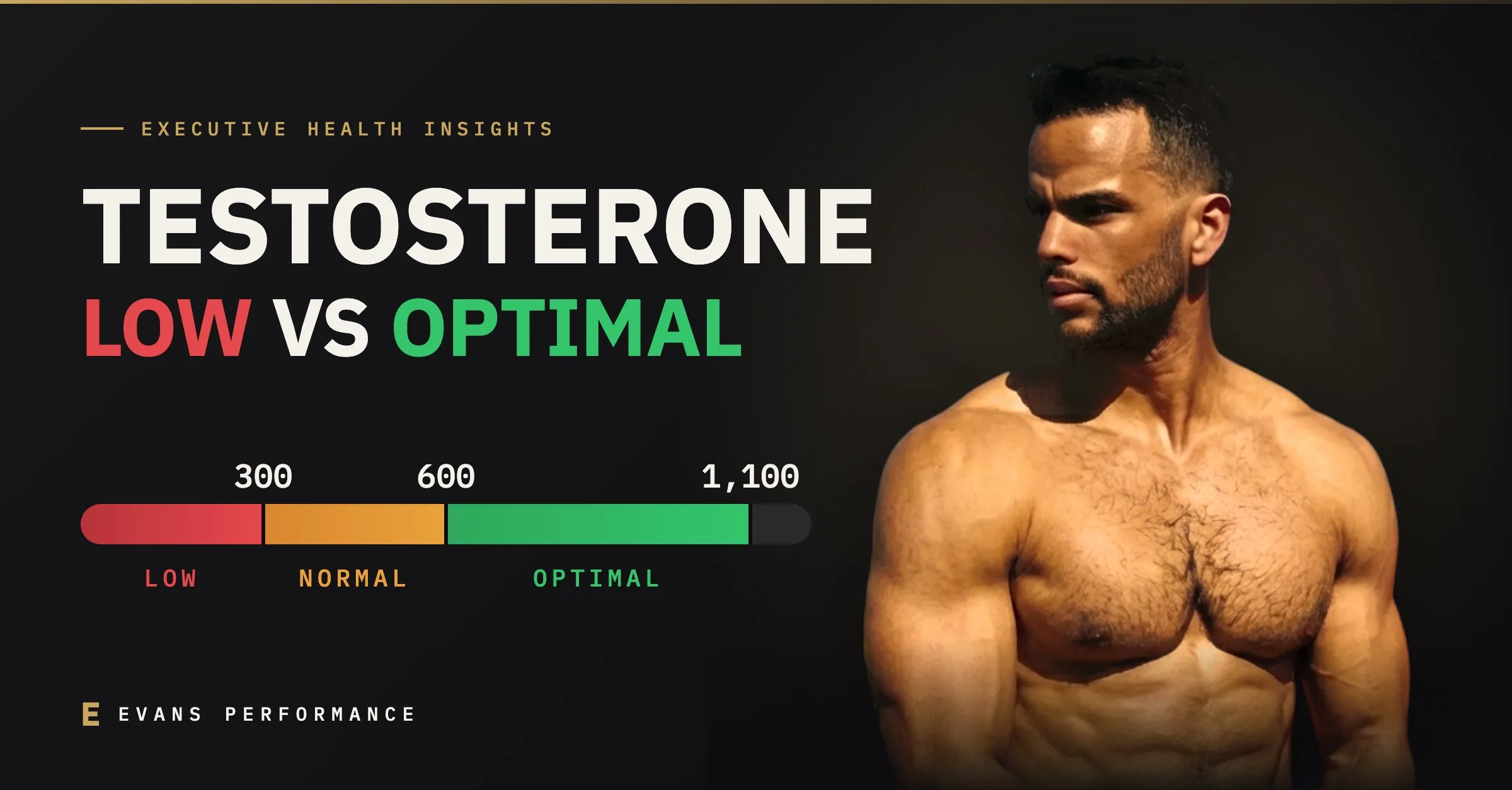
Free testosterone helps you keep muscle while you lose fat. We want 105 to 224 pg/mL. Losing fat tends to raise it.
Free Executive Health Score
See where you stand.
Seven quick questions get you a letter grade, a read on each area of your health, and the one area costing you the most.
Example result
- Body composition Needs work
- Nutrition Needs work
- Sleep Solid
- Alcohol Strong
What's costing you the most Body composition Fix it and this score goes from 68 to 78.
Common questions
Why did I gain weight when I started working out?
New or harder training makes your muscles store more carbohydrate, which holds water. Muscles also hold fluid while they repair. Both can add a few pounds in the first weeks. The gain levels off as you adapt. If it keeps climbing after your first month, look at how much more you've been eating since you started.
Should I add more cardio to lose weight?
Get your daily steps in place first. Then add easy cardio you can talk through, for your heart and your recovery. Easy cardio is also simple to keep up on a travel week. Keep your strength sessions first on the calendar.
How fast should the weight come off once it starts moving?
Most of our clients lose 7 to 10+ pounds in their first month. Part of that early drop is water. Most drop 15 to 20 pounds of fat by day 90. From there, your waist and body fat trend tell you as much as the scale.
 Watch on YouTube · Jared Evans Lose Belly Fat as a Busy Professional: How We Build Your Plan From Bloodwork Watch the Video
Sources
- [1] Martin CK, Johnson WD, Myers CA, et al. Effect of different doses of supervised exercise on food intake, metabolism, and non-exercise physical activity: The E-MECHANIC randomized controlled trial. Am J Clin Nutr. 2019;110(3):583-592.
- [2] Subar AF, Kipnis V, Troiano RP, et al. Using intake biomarkers to evaluate the extent of dietary misreporting in a large sample of adults: the OPEN study. Am J Epidemiol. 2003;158(1):1-13.
- [3] Siler SQ, Neese RA, Hellerstein MK. De novo lipogenesis, lipid kinetics, and whole-body lipid balances in humans after acute alcohol consumption. Am J Clin Nutr. 1999;70(5):928-36.
- [4] Ebrahim IO, Shapiro CM, Williams AJ, Fenwick PB. Alcohol and sleep I: effects on normal sleep. Alcohol Clin Exp Res. 2013;37(4):539-49.
- [5] Fontana L, Klein S, Holloszy JO, Premachandra BN. Effect of long-term calorie restriction with adequate protein and micronutrients on thyroid hormones. J Clin Endocrinol Metab. 2006;91(8):3232-5.
- [6] Nedeltcheva AV, Kilkus JM, Imperial J, Schoeller DA, Penev PD. Insufficient sleep undermines dietary efforts to reduce adiposity. Ann Intern Med. 2010;153(7):435-41.
- [7] Spiegel K, Tasali E, Penev P, Van Cauter E. Brief communication: Sleep curtailment in healthy young men is associated with decreased leptin levels, elevated ghrelin levels, and increased hunger and appetite. Ann Intern Med. 2004;141(11):846-50.
- [8] DeFronzo RA, Tripathy D. Skeletal muscle insulin resistance is the primary defect in type 2 diabetes. Diabetes Care. 2009;32(Suppl 2):S157-63.
- [9] Corona G, Rastrelli G, Monami M, et al. Body weight loss reverts obesity-associated hypogonadotropic hypogonadism: a systematic review and meta-analysis. Eur J Endocrinol. 2013;168(6):829-43.
This article is for educational purposes only and is not medical advice. Consult your physician before making changes to your health, training, or supplementation.