Back
Why You Can’t Sleep Despite Being Exhausted
The nervous system problem behind chronic fatigue, and the protocol that fixes it.
Aug 29, 2024
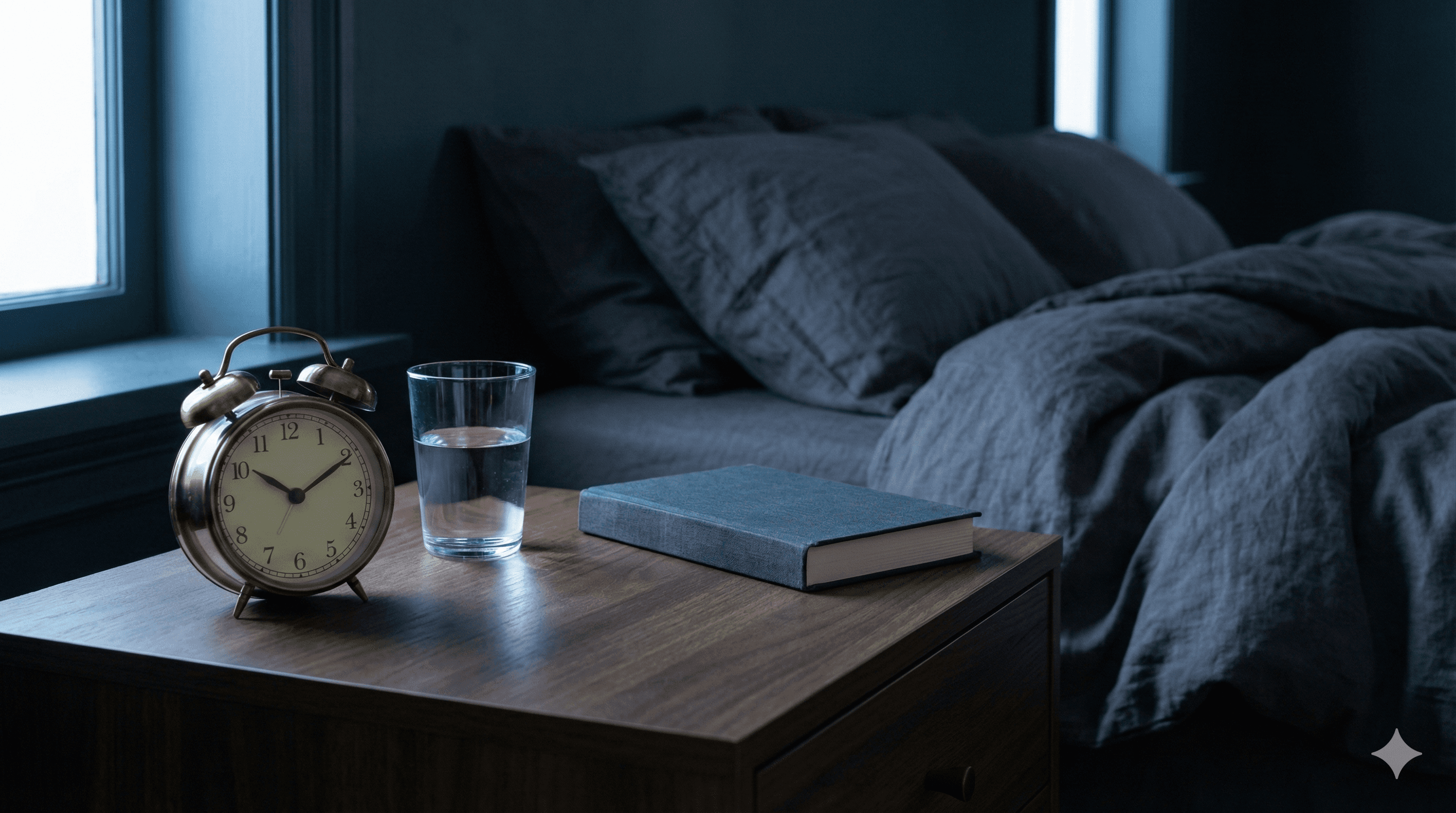
You are exhausted. You have been exhausted for months. But when your head hits the pillow, your brain will not shut off.
You lie there running through tomorrow's meetings. Replaying conversations. Solving problems that do not need solving at 11 PM. Eventually you fall asleep, but you wake up at 3 AM and the cycle repeats.
The alarm goes off and you feel like you never slept at all.
This pattern has a cost most executives underestimate. Research published in Occupational and Environmental Medicine found that 17 hours of wakefulness produces cognitive impairment equivalent to a blood alcohol concentration of 0.05%. Response speeds slow by up to 50%. Decision quality degrades significantly.
Push to 24 hours awake, and impairment matches 0.10% BAC, beyond the legal limit for driving. Chronic restriction of 6 hours or less for 10 consecutive days produces cognitive decrements equivalent to pulling an all-nighter.
The Real Problem: Your Nervous System Is Stuck
Your autonomic nervous system has two modes. Sympathetic activation is the performance state: elevated heart rate, heightened focus, cortisol and adrenaline mobilized for action. Parasympathetic activation is the recovery state: heart rate slows, digestion resumes, the body shifts resources toward repair and restoration.
Sleep requires parasympathetic dominance. You cannot will yourself into deep sleep while your nervous system remains in threat-detection mode.
The executive lifestyle creates sustained sympathetic activation. Back-to-back meetings. Constant communication. Decision fatigue that accumulates through the day. Evening email. Late dinners. The nervous system never receives the signal that the threat has passed.
You are exhausted because you are running on stress hormones. You cannot sleep because your body still thinks it is under attack.
What Poor Sleep Is Costing You
The consequences cascade across every system.
Hormonal disruption. Testosterone synthesis occurs primarily during sleep, with 60 to 70% of daily production happening overnight. Growth hormone secretion peaks during deep sleep. In sleep-restricted individuals, testosterone levels drop lowest between 2 PM and 10 PM, precisely when executives need peak cognitive performance.
Impaired fat loss. Sleep restriction drives insulin resistance within days. During caloric deficit, sleep-deprived individuals lose up to 60% of weight from muscle versus 20% with adequate sleep. The body becomes catabolic.
Reduced stress capacity. Chronic sympathetic activation depletes your ability to handle additional stress. The threshold for overwhelm drops. Minor irritations trigger disproportionate responses. Your resilience weakens.
Impaired recovery. Training adaptation, tissue repair, and glycogen restoration happen during parasympathetic states. Poor sleep means diminishing returns from training and extended recovery times between sessions.
The Sleep Optimization Protocol
The goal is engineering the conditions that allow your nervous system to shift from activation to recovery before sleep, and to maintain that state through the night.
Environment: Build the Container First
Your physical environment supersedes willpower and supplementation. Get this wrong and nothing else matters.
Temperature. Core body temperature must drop 2 to 3°F to initiate and maintain sleep. Deep sleep occurs at your lowest temperature point, typically between 2 and 4 AM. Target bedroom temperature between 58 and 67 degrees. Cooling mattress technology provides precision control for those who run hot or share a bed with someone who prefers warmth.
Light. Complete darkness during sleep hours. Even minimal light exposure of 3 to 5 lux suppresses melatonin and elevates cortisol. Your skin contains photoreceptors that respond to light independent of visual input. Blackout curtains or a quality sleep mask are essential. Cover or remove LED indicators on chargers and devices.
Sound. Acoustic disruptions fragment sleep architecture even without conscious waking. Each fragmentation event disrupts sleep cycles and elevates sympathetic activity. White noise, pink noise, or consistent fan sound masks environmental variability.
Circadian Anchors: Set the Clock
Your internal clock synchronizes to light exposure, meal timing, and movement patterns. Consistent cues create predictable sleep-wake cycles. Inconsistency fragments this system.
Morning light. 10 to 15 minutes of outdoor light exposure within 30 minutes of waking. This sets the circadian clock, initiates the cortisol awakening response at the appropriate time, and starts the melatonin timer for 14 to 16 hours later. Overcast days still provide 10x the lux of indoor lighting.
Consistent timing. Sleep and wake times within 30 minutes daily, including weekends. Anchor wake time first, then calculate backward for 7.5 to 8 hours in bed. Circadian amplitude strengthens with predictable patterns.
Caffeine cutoff. 2 PM for most individuals. Caffeine has a half-life of 4 to 6 hours. If you metabolize slowly, approximately 50% of the population, noon cutoff may be necessary. Track sleep quality and HRV response to determine your personal tolerance window.
Evening Downshift: Signal Safety to Your Nervous System
This is where most executives fail. The day ends but the activation continues. Intentional downshift practices are required.
Digital sunset. Screens off 60 to 90 minutes before bed. Blue light suppresses melatonin, but the larger issue is cognitive activation. Work content, news, and social media keep the prefrontal cortex engaged and the stress response active. Separate work devices from the bedroom entirely.
Thermal manipulation. Hot bath or sauna 90 to 120 minutes before bed. Water temperature 102 to 104 degrees for 20 to 30 minutes. The subsequent core temperature drop after exiting mimics the natural circadian decline and facilitates sleep onset.
Parasympathetic activation. Breathwork protocols shift autonomic balance. Extended exhale patterns activate the vagus nerve and signal safety: 4 count inhale, 6 to 8 count exhale, repeated for 5 to 10 minutes. Box breathing works equally well. This is a physiological intervention, not a relaxation technique.
Cognitive offloading. Brain dump before bed. Write tomorrow's priorities and any open loops to externalize cognitive load. This reduces prefrontal cortex activation and prevents rumination once horizontal.
Nutrition and Supplementation
Meal timing. Complete final meal ideally 3-4 hours before bed. Large meals or high-glycemic loads late in the evening redirect blood flow to digestion, elevate core temperature, and can cause glucose volatility overnight that triggers early waking.
Blood sugar stability. Nocturnal hypoglycemia triggers cortisol and adrenaline release, causing 2 to 4 AM waking. If you wake consistently at this time, a small protein-based snack before bed (Greek yogurt with berries, collagen in warm milk) can stabilize blood sugar through the night.
Magnesium. Activates the vagus nerve, modulates the HPA axis, enhances GABAergic inhibition, and supports parasympathetic tone. High-quality glycinate or threonate forms preferred. 300 to 400 mg before bed.
Glycine. Lowers core body temperature, enhances slow-wave deep sleep, and supports relaxation. 3 grams before bed.
L-theanine. Promotes alpha brain wave activity associated with calm focus, reduces anxiety without sedation. 200 to 400 mg before bed.
Access all recommended supplements at 25% off through our Thorne dispensary. Email jared@evansperformancesystems.com for access.
How to Know It Is Working
Subjective assessment is unreliable. Executives routinely underestimate impairment. Track objective markers.
Heart rate variability (HRV) measures parasympathetic nervous system activity. Higher HRV indicates better recovery capacity. Track a 7-day rolling average. Poor sleep typically produces 10 to 30% reduction. Alcohol produces 15 to 40% reduction. Optimal sleep returns HRV to baseline or above. Multi-day downward trends signal accumulated stress exceeding recovery.
Resting heart rate elevation of 5 to 10 bpm above your baseline for 3 or more consecutive days indicates incomplete recovery and sympathetic dominance. This is your signal to prioritize sleep over training volume or the 8PM work session.
Sleep architecture from wearables provides additional data. Target 15 to 25% deep sleep and 20 to 25% REM. Low deep sleep indicates impaired physical recovery and growth hormone suppression. Low REM indicates cognitive consolidation issues. Sleep onset latency should be under 20 minutes.
Key Takeaways
Sleep is a parasympathetic event. You cannot access deep, restorative sleep while your nervous system remains in activation mode.
Environment comes first. Temperature between 60 and 67°F, complete darkness, and consistent sound masking create the conditions for sleep onset and maintenance.
Circadian anchors set the clock. Morning light within 30 minutes of waking, consistent sleep-wake times, and a 2 PM caffeine cutoff stabilize your rhythm.
Evening downshift is mandatory. Digital sunset, thermal manipulation, breathwork, and cognitive offloading signal safety to your nervous system.
Track objectively. HRV trends, resting heart rate, and sleep architecture tell you whether your protocol is working.
Work With Us
We build sleep and recovery protocols for executives that account for travel, high-stakes weeks, and unpredictable schedules. Everything is designed around your constraints and tracked with objective data.
Book a discovery call to see if we're a fit.
[Book Your Discovery Call]
You are exhausted. You have been exhausted for months. But when your head hits the pillow, your brain will not shut off.
You lie there running through tomorrow's meetings. Replaying conversations. Solving problems that do not need solving at 11 PM. Eventually you fall asleep, but you wake up at 3 AM and the cycle repeats.
The alarm goes off and you feel like you never slept at all.
This pattern has a cost most executives underestimate. Research published in Occupational and Environmental Medicine found that 17 hours of wakefulness produces cognitive impairment equivalent to a blood alcohol concentration of 0.05%. Response speeds slow by up to 50%. Decision quality degrades significantly.
Push to 24 hours awake, and impairment matches 0.10% BAC, beyond the legal limit for driving. Chronic restriction of 6 hours or less for 10 consecutive days produces cognitive decrements equivalent to pulling an all-nighter.
The Real Problem: Your Nervous System Is Stuck
Your autonomic nervous system has two modes. Sympathetic activation is the performance state: elevated heart rate, heightened focus, cortisol and adrenaline mobilized for action. Parasympathetic activation is the recovery state: heart rate slows, digestion resumes, the body shifts resources toward repair and restoration.
Sleep requires parasympathetic dominance. You cannot will yourself into deep sleep while your nervous system remains in threat-detection mode.
The executive lifestyle creates sustained sympathetic activation. Back-to-back meetings. Constant communication. Decision fatigue that accumulates through the day. Evening email. Late dinners. The nervous system never receives the signal that the threat has passed.
You are exhausted because you are running on stress hormones. You cannot sleep because your body still thinks it is under attack.
What Poor Sleep Is Costing You
The consequences cascade across every system.
Hormonal disruption. Testosterone synthesis occurs primarily during sleep, with 60 to 70% of daily production happening overnight. Growth hormone secretion peaks during deep sleep. In sleep-restricted individuals, testosterone levels drop lowest between 2 PM and 10 PM, precisely when executives need peak cognitive performance.
Impaired fat loss. Sleep restriction drives insulin resistance within days. During caloric deficit, sleep-deprived individuals lose up to 60% of weight from muscle versus 20% with adequate sleep. The body becomes catabolic.
Reduced stress capacity. Chronic sympathetic activation depletes your ability to handle additional stress. The threshold for overwhelm drops. Minor irritations trigger disproportionate responses. Your resilience weakens.
Impaired recovery. Training adaptation, tissue repair, and glycogen restoration happen during parasympathetic states. Poor sleep means diminishing returns from training and extended recovery times between sessions.
The Sleep Optimization Protocol
The goal is engineering the conditions that allow your nervous system to shift from activation to recovery before sleep, and to maintain that state through the night.
Environment: Build the Container First
Your physical environment supersedes willpower and supplementation. Get this wrong and nothing else matters.
Temperature. Core body temperature must drop 2 to 3°F to initiate and maintain sleep. Deep sleep occurs at your lowest temperature point, typically between 2 and 4 AM. Target bedroom temperature between 58 and 67 degrees. Cooling mattress technology provides precision control for those who run hot or share a bed with someone who prefers warmth.
Light. Complete darkness during sleep hours. Even minimal light exposure of 3 to 5 lux suppresses melatonin and elevates cortisol. Your skin contains photoreceptors that respond to light independent of visual input. Blackout curtains or a quality sleep mask are essential. Cover or remove LED indicators on chargers and devices.
Sound. Acoustic disruptions fragment sleep architecture even without conscious waking. Each fragmentation event disrupts sleep cycles and elevates sympathetic activity. White noise, pink noise, or consistent fan sound masks environmental variability.
Circadian Anchors: Set the Clock
Your internal clock synchronizes to light exposure, meal timing, and movement patterns. Consistent cues create predictable sleep-wake cycles. Inconsistency fragments this system.
Morning light. 10 to 15 minutes of outdoor light exposure within 30 minutes of waking. This sets the circadian clock, initiates the cortisol awakening response at the appropriate time, and starts the melatonin timer for 14 to 16 hours later. Overcast days still provide 10x the lux of indoor lighting.
Consistent timing. Sleep and wake times within 30 minutes daily, including weekends. Anchor wake time first, then calculate backward for 7.5 to 8 hours in bed. Circadian amplitude strengthens with predictable patterns.
Caffeine cutoff. 2 PM for most individuals. Caffeine has a half-life of 4 to 6 hours. If you metabolize slowly, approximately 50% of the population, noon cutoff may be necessary. Track sleep quality and HRV response to determine your personal tolerance window.
Evening Downshift: Signal Safety to Your Nervous System
This is where most executives fail. The day ends but the activation continues. Intentional downshift practices are required.
Digital sunset. Screens off 60 to 90 minutes before bed. Blue light suppresses melatonin, but the larger issue is cognitive activation. Work content, news, and social media keep the prefrontal cortex engaged and the stress response active. Separate work devices from the bedroom entirely.
Thermal manipulation. Hot bath or sauna 90 to 120 minutes before bed. Water temperature 102 to 104 degrees for 20 to 30 minutes. The subsequent core temperature drop after exiting mimics the natural circadian decline and facilitates sleep onset.
Parasympathetic activation. Breathwork protocols shift autonomic balance. Extended exhale patterns activate the vagus nerve and signal safety: 4 count inhale, 6 to 8 count exhale, repeated for 5 to 10 minutes. Box breathing works equally well. This is a physiological intervention, not a relaxation technique.
Cognitive offloading. Brain dump before bed. Write tomorrow's priorities and any open loops to externalize cognitive load. This reduces prefrontal cortex activation and prevents rumination once horizontal.
Nutrition and Supplementation
Meal timing. Complete final meal ideally 3-4 hours before bed. Large meals or high-glycemic loads late in the evening redirect blood flow to digestion, elevate core temperature, and can cause glucose volatility overnight that triggers early waking.
Blood sugar stability. Nocturnal hypoglycemia triggers cortisol and adrenaline release, causing 2 to 4 AM waking. If you wake consistently at this time, a small protein-based snack before bed (Greek yogurt with berries, collagen in warm milk) can stabilize blood sugar through the night.
Magnesium. Activates the vagus nerve, modulates the HPA axis, enhances GABAergic inhibition, and supports parasympathetic tone. High-quality glycinate or threonate forms preferred. 300 to 400 mg before bed.
Glycine. Lowers core body temperature, enhances slow-wave deep sleep, and supports relaxation. 3 grams before bed.
L-theanine. Promotes alpha brain wave activity associated with calm focus, reduces anxiety without sedation. 200 to 400 mg before bed.
Access all recommended supplements at 25% off through our Thorne dispensary. Email jared@evansperformancesystems.com for access.
How to Know It Is Working
Subjective assessment is unreliable. Executives routinely underestimate impairment. Track objective markers.
Heart rate variability (HRV) measures parasympathetic nervous system activity. Higher HRV indicates better recovery capacity. Track a 7-day rolling average. Poor sleep typically produces 10 to 30% reduction. Alcohol produces 15 to 40% reduction. Optimal sleep returns HRV to baseline or above. Multi-day downward trends signal accumulated stress exceeding recovery.
Resting heart rate elevation of 5 to 10 bpm above your baseline for 3 or more consecutive days indicates incomplete recovery and sympathetic dominance. This is your signal to prioritize sleep over training volume or the 8PM work session.
Sleep architecture from wearables provides additional data. Target 15 to 25% deep sleep and 20 to 25% REM. Low deep sleep indicates impaired physical recovery and growth hormone suppression. Low REM indicates cognitive consolidation issues. Sleep onset latency should be under 20 minutes.
Key Takeaways
Sleep is a parasympathetic event. You cannot access deep, restorative sleep while your nervous system remains in activation mode.
Environment comes first. Temperature between 60 and 67°F, complete darkness, and consistent sound masking create the conditions for sleep onset and maintenance.
Circadian anchors set the clock. Morning light within 30 minutes of waking, consistent sleep-wake times, and a 2 PM caffeine cutoff stabilize your rhythm.
Evening downshift is mandatory. Digital sunset, thermal manipulation, breathwork, and cognitive offloading signal safety to your nervous system.
Track objectively. HRV trends, resting heart rate, and sleep architecture tell you whether your protocol is working.
Work With Us
We build sleep and recovery protocols for executives that account for travel, high-stakes weeks, and unpredictable schedules. Everything is designed around your constraints and tracked with objective data.
Book a discovery call to see if we're a fit.
[Book Your Discovery Call]
You are exhausted. You have been exhausted for months. But when your head hits the pillow, your brain will not shut off.
You lie there running through tomorrow's meetings. Replaying conversations. Solving problems that do not need solving at 11 PM. Eventually you fall asleep, but you wake up at 3 AM and the cycle repeats.
The alarm goes off and you feel like you never slept at all.
This pattern has a cost most executives underestimate. Research published in Occupational and Environmental Medicine found that 17 hours of wakefulness produces cognitive impairment equivalent to a blood alcohol concentration of 0.05%. Response speeds slow by up to 50%. Decision quality degrades significantly.
Push to 24 hours awake, and impairment matches 0.10% BAC, beyond the legal limit for driving. Chronic restriction of 6 hours or less for 10 consecutive days produces cognitive decrements equivalent to pulling an all-nighter.
The Real Problem: Your Nervous System Is Stuck
Your autonomic nervous system has two modes. Sympathetic activation is the performance state: elevated heart rate, heightened focus, cortisol and adrenaline mobilized for action. Parasympathetic activation is the recovery state: heart rate slows, digestion resumes, the body shifts resources toward repair and restoration.
Sleep requires parasympathetic dominance. You cannot will yourself into deep sleep while your nervous system remains in threat-detection mode.
The executive lifestyle creates sustained sympathetic activation. Back-to-back meetings. Constant communication. Decision fatigue that accumulates through the day. Evening email. Late dinners. The nervous system never receives the signal that the threat has passed.
You are exhausted because you are running on stress hormones. You cannot sleep because your body still thinks it is under attack.
What Poor Sleep Is Costing You
The consequences cascade across every system.
Hormonal disruption. Testosterone synthesis occurs primarily during sleep, with 60 to 70% of daily production happening overnight. Growth hormone secretion peaks during deep sleep. In sleep-restricted individuals, testosterone levels drop lowest between 2 PM and 10 PM, precisely when executives need peak cognitive performance.
Impaired fat loss. Sleep restriction drives insulin resistance within days. During caloric deficit, sleep-deprived individuals lose up to 60% of weight from muscle versus 20% with adequate sleep. The body becomes catabolic.
Reduced stress capacity. Chronic sympathetic activation depletes your ability to handle additional stress. The threshold for overwhelm drops. Minor irritations trigger disproportionate responses. Your resilience weakens.
Impaired recovery. Training adaptation, tissue repair, and glycogen restoration happen during parasympathetic states. Poor sleep means diminishing returns from training and extended recovery times between sessions.
The Sleep Optimization Protocol
The goal is engineering the conditions that allow your nervous system to shift from activation to recovery before sleep, and to maintain that state through the night.
Environment: Build the Container First
Your physical environment supersedes willpower and supplementation. Get this wrong and nothing else matters.
Temperature. Core body temperature must drop 2 to 3°F to initiate and maintain sleep. Deep sleep occurs at your lowest temperature point, typically between 2 and 4 AM. Target bedroom temperature between 58 and 67 degrees. Cooling mattress technology provides precision control for those who run hot or share a bed with someone who prefers warmth.
Light. Complete darkness during sleep hours. Even minimal light exposure of 3 to 5 lux suppresses melatonin and elevates cortisol. Your skin contains photoreceptors that respond to light independent of visual input. Blackout curtains or a quality sleep mask are essential. Cover or remove LED indicators on chargers and devices.
Sound. Acoustic disruptions fragment sleep architecture even without conscious waking. Each fragmentation event disrupts sleep cycles and elevates sympathetic activity. White noise, pink noise, or consistent fan sound masks environmental variability.
Circadian Anchors: Set the Clock
Your internal clock synchronizes to light exposure, meal timing, and movement patterns. Consistent cues create predictable sleep-wake cycles. Inconsistency fragments this system.
Morning light. 10 to 15 minutes of outdoor light exposure within 30 minutes of waking. This sets the circadian clock, initiates the cortisol awakening response at the appropriate time, and starts the melatonin timer for 14 to 16 hours later. Overcast days still provide 10x the lux of indoor lighting.
Consistent timing. Sleep and wake times within 30 minutes daily, including weekends. Anchor wake time first, then calculate backward for 7.5 to 8 hours in bed. Circadian amplitude strengthens with predictable patterns.
Caffeine cutoff. 2 PM for most individuals. Caffeine has a half-life of 4 to 6 hours. If you metabolize slowly, approximately 50% of the population, noon cutoff may be necessary. Track sleep quality and HRV response to determine your personal tolerance window.
Evening Downshift: Signal Safety to Your Nervous System
This is where most executives fail. The day ends but the activation continues. Intentional downshift practices are required.
Digital sunset. Screens off 60 to 90 minutes before bed. Blue light suppresses melatonin, but the larger issue is cognitive activation. Work content, news, and social media keep the prefrontal cortex engaged and the stress response active. Separate work devices from the bedroom entirely.
Thermal manipulation. Hot bath or sauna 90 to 120 minutes before bed. Water temperature 102 to 104 degrees for 20 to 30 minutes. The subsequent core temperature drop after exiting mimics the natural circadian decline and facilitates sleep onset.
Parasympathetic activation. Breathwork protocols shift autonomic balance. Extended exhale patterns activate the vagus nerve and signal safety: 4 count inhale, 6 to 8 count exhale, repeated for 5 to 10 minutes. Box breathing works equally well. This is a physiological intervention, not a relaxation technique.
Cognitive offloading. Brain dump before bed. Write tomorrow's priorities and any open loops to externalize cognitive load. This reduces prefrontal cortex activation and prevents rumination once horizontal.
Nutrition and Supplementation
Meal timing. Complete final meal ideally 3-4 hours before bed. Large meals or high-glycemic loads late in the evening redirect blood flow to digestion, elevate core temperature, and can cause glucose volatility overnight that triggers early waking.
Blood sugar stability. Nocturnal hypoglycemia triggers cortisol and adrenaline release, causing 2 to 4 AM waking. If you wake consistently at this time, a small protein-based snack before bed (Greek yogurt with berries, collagen in warm milk) can stabilize blood sugar through the night.
Magnesium. Activates the vagus nerve, modulates the HPA axis, enhances GABAergic inhibition, and supports parasympathetic tone. High-quality glycinate or threonate forms preferred. 300 to 400 mg before bed.
Glycine. Lowers core body temperature, enhances slow-wave deep sleep, and supports relaxation. 3 grams before bed.
L-theanine. Promotes alpha brain wave activity associated with calm focus, reduces anxiety without sedation. 200 to 400 mg before bed.
Access all recommended supplements at 25% off through our Thorne dispensary. Email jared@evansperformancesystems.com for access.
How to Know It Is Working
Subjective assessment is unreliable. Executives routinely underestimate impairment. Track objective markers.
Heart rate variability (HRV) measures parasympathetic nervous system activity. Higher HRV indicates better recovery capacity. Track a 7-day rolling average. Poor sleep typically produces 10 to 30% reduction. Alcohol produces 15 to 40% reduction. Optimal sleep returns HRV to baseline or above. Multi-day downward trends signal accumulated stress exceeding recovery.
Resting heart rate elevation of 5 to 10 bpm above your baseline for 3 or more consecutive days indicates incomplete recovery and sympathetic dominance. This is your signal to prioritize sleep over training volume or the 8PM work session.
Sleep architecture from wearables provides additional data. Target 15 to 25% deep sleep and 20 to 25% REM. Low deep sleep indicates impaired physical recovery and growth hormone suppression. Low REM indicates cognitive consolidation issues. Sleep onset latency should be under 20 minutes.
Key Takeaways
Sleep is a parasympathetic event. You cannot access deep, restorative sleep while your nervous system remains in activation mode.
Environment comes first. Temperature between 60 and 67°F, complete darkness, and consistent sound masking create the conditions for sleep onset and maintenance.
Circadian anchors set the clock. Morning light within 30 minutes of waking, consistent sleep-wake times, and a 2 PM caffeine cutoff stabilize your rhythm.
Evening downshift is mandatory. Digital sunset, thermal manipulation, breathwork, and cognitive offloading signal safety to your nervous system.
Track objectively. HRV trends, resting heart rate, and sleep architecture tell you whether your protocol is working.
Work With Us
We build sleep and recovery protocols for executives that account for travel, high-stakes weeks, and unpredictable schedules. Everything is designed around your constraints and tracked with objective data.
Book a discovery call to see if we're a fit.
[Book Your Discovery Call]
Evans Performance Research Team
Other articles you might like
Learn how to increase your productivity with calendars